Music Notation - Clefs and Ligatures
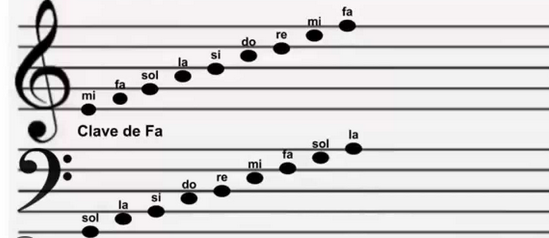
A clef is a symbol that indicates which notes are represented by the lines and spaces of a musical staff. Music written in different clefs sounds differently, because the same line on each clef represents a different pitch. For example, if a song is written in treble clef, it will sound an octave lower than if it were written in bass clef.
A variety of clefs have been used in music for both ancient and modern times. Some clefs are still in use today, while others have become obsolete. Each clef has a unique character that sets it apart from the other clefs.
There are several types of clefs: the soprano clef, the alto clef, the tenor clef, and the viola clef. These clefs are based on different historical traditions, and each has its own distinct voice or instrument associated with it. The tenor clef, for instance, was used in the 16th and 17th centuries in the upper parts of keyboard music and vocal music for sopranos, as well as for viola da gamba and mandola music.
Some clefs have been modified to change their voice or instruments associated with them. For example, a variant of the soprano clef, called the alto clef, is now used in some instrumental music and vocal music for sopranos, including countertenor voices. The tenor clef is currently used in violin and viola d'amore music, as well as in some alto trombone and viola da gamba music. The viola clef is also known as the alto clef and was originally used for the upper parts of a keyboard instrument (particularly in France - see Bauyn manuscript), as well as in some tenor voice and high viola da gamba music.
In addition to the clefs discussed above, there is one additional type of musical notation called the fa sol ligature. This clef is used on some modern symphonies and classical chamber works, as well as on the choral works of certain composers such as Beethoven. It is a combination of the soprano clef and the tenor clef, and it is used to write in a key that is a third above soprano tuning.
As a result, it is often difficult for musicians to sight-read music written in fa sol ligature at first glance. This is especially true for students of piano, since there are two clefs on the same page and they each represent different pitches. Fortunately, there are ways to help students learn to read the fa sol ligature more quickly.
The first step is to understand the underlying structure of the fa sol ligature. The fa sol ligature consists of four lines and five spaces, which correspond to the notational symbols for the letters si, re, mi, and do in the treble clef. It is a good idea to memorize these notational symbols, because they will be useful later in the process of learning the Clave de Fa. In addition, it is helpful to have a practice song in fa sol ligature in order to test your ability to read at a fast pace.